Amphetamines
amphetamines- Uppers
- Sulphate
- Sulph
- Go Fast
- Fast
- Dexies
- Dex
- Crank
- Ice
- Billy Whizz
- Billy
- Whizz
- Phet
- Speed
- Methylamphetamine
- Dextroamphetamine
- Dexamphetamine Sulphate
- Amphetamine Sulphate
Scientific Names: Amphetamine sulphate (Also spelt as Amfetamine sulfate)
Generic Names: Amphetamine Sulphate

5mg dexamphetamine tablets (Dexedrine), white, marked SKF.
Illicit:
Amphetamine sulphate powder ranges in colour from off-white to pink (known as pink champagne). Methylamphetamine comes as white crystals, and is known as ice, or in tablets known in Thailand as yabba or shabu.
Desired Effects:
- Increased energy
- Alertness
- Euphoria, and sociability.
- Loss of appetite is seen as desirable by some people.
Side Effects:
- Insomnia
- Dry mouth
- The come down includes fatigue and depression
- The only way to avoid any risk of harm from amphetamine is not to use it. People who should particularly avoid it are those with psychiatric problems, respiratory complaints like asthma, and heart conditions.
- Amphetamine is a potent stimulant drug and will keep you awake for long periods of time. So don’t expect to sleep for at least 8 hours or more. Try not to use other drugs to come down or help you sleep.
- Don’t use too much: larger amounts increase risk and can make you more jittery than stimulated.
- Don't forget to eat - amphetamine suppresses appetite so eat before and after using.
- Avoid using more than once a week, avoid using two or more days in a row – allow your body to recover.
- Using large amounts or more than one stimulant drug at a time drug can put your heart under significant stress.
- Amphetamine may interact badly with some medicines that are monoamine oxidase inhibitors (MAOIs).
- Swallowing amphetamines means the full effect comes on much slower, so don’t be tempted to take more until the effects have fully kicked in. It is better to swallow the powder wrapped in a cigarette paper (bombing) as this might reduce the risk of stomach problems. Alternatively mix the powder into a non-alcoholic drink (Whizzy water).
- Snorting amphetamine can cause irritation and bleeding to the nose and risks passing on viruses if tubes shared. If snorting amphetamine: chop the powder as finely as possible: don’t share straws or snorting tubes; alternate between nostrils; rinse the nose with warm water after use.
- Injecting amphetamine is by far the riskiest way to use and far more likely to lead to overdose. If you do inject, it is essential to chop the powder as finely as possible; always use clean needles and never share any equipment.
- Use in a safe environment with trusted company and tell someone you are with what you are taking.
- Amphetamines keep you awake and make you thirsty. It can be easy to end up drinking very large amounts of alcohol as you may not feel as drunk. Large amounts of alcohol increase risk and will lead to the mother of all comedown headaches the following day.
- Like the advice for ecstasy users: if you are dancing at a club, remember to chill out and sip water/juice regularly (don’t drink large amounts in one go).
- If you feel paranoid, go somewhere quiet and safe. Calm and reassure your friends that everything is OK; if you start to pant, control your breathing; breath in through your nose, out through your mouth.
- Look after your mates and call an ambulance in an emergency.
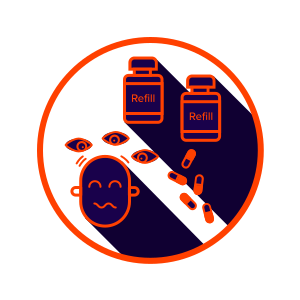
Short term risks
Anxiety, paranoia, tolerance.
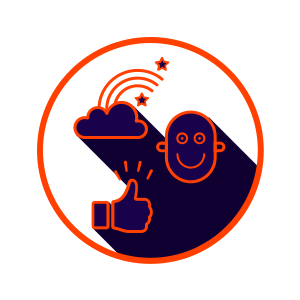
Desired risks
Euphoria, alertness, confidence.
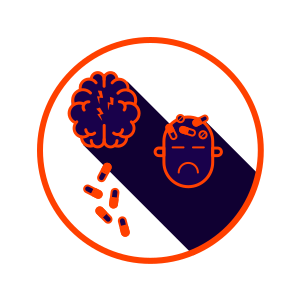
Long term risks
Psychosis, psychological dependence.
Long term risks:
- Stimulant drugs like amphetamine can cause drug related psychosis and trigger episodes of psychotic illness in people with existing mental illness.
- Dependence and severe psychological withdrawal symptoms with prolonged use.
- Injecting amphetamine risks include vein and soft tissue damage, blood borne viruses if equipment is shared and an increase risk of overdose.
Short term risks:
- Anxiety
- Paranoia
- Overdose
- Extremely high (and dangerous) blood pressure
- Increased heart rate
- Coma
- Heart attack
- Stroke
- Death. In 2024, 111 drug deaths were associated with amphetamine in England and Wales.
Street amphetamine is a stimulant drug that is usually sold an off-white-coloured powder, although it is sometimes coloured with food dye. When freshly made it is in a paste form which when dried becomes a powder. It is sometimes sold in this form, known as Base or Paste. Powdered amphetamine is often low purity product, and although Base is often a higher purity, it is still often heavily adulterated.
Street amphetamine is a mixture of two chemical compounds, levoamphetamine and dexamphetamine, which is more potent and has more psychological effects. The medical forms of amphetamine now available in the UK are nearly all dexamphetamine (medically known as dexamfetamine). This is still available for the treatment of narcolepsy (unable to keep awake) and forms of ADHD in children but diverted or stolen medical forms are rarely seen as street drugs these days.
Parents & other relatives
Drug agencies also provide lots of advice and support to parents of people using these drugs. Many street agencies can provide relative support groups or counselling for family members, partners etc.